It seems to be that time of year, as summer and its customary indulgences come to an end, that people everywhere are trying to refocus, lock in, and “reset.” For some, the reset involves cutting out sweets and treats and returning to the gym. For others, this reset involves detoxing, trying trending supplements, or enrolling in programs to stay on track.
And while a program can be helpful when thoughtfully curated and built according to your individual needs, a one-size-fits-all program can do more harm than good. One such popular program is 75 Hard. This program is so popular that Catholics came up with their own version, Nineveh 90. 75 Hard is so hard that Women’s Health Magazine had to come up with the 75 Soft Challenge just so that everyone could be included.
And while we are fully behind encouraging everyone to live an active and healthy lifestyle, to eat right, and to be working on self-improvement, we have beef with 75 Hard and all its cousins, especially when implemented by women.
What is 75 Hard?
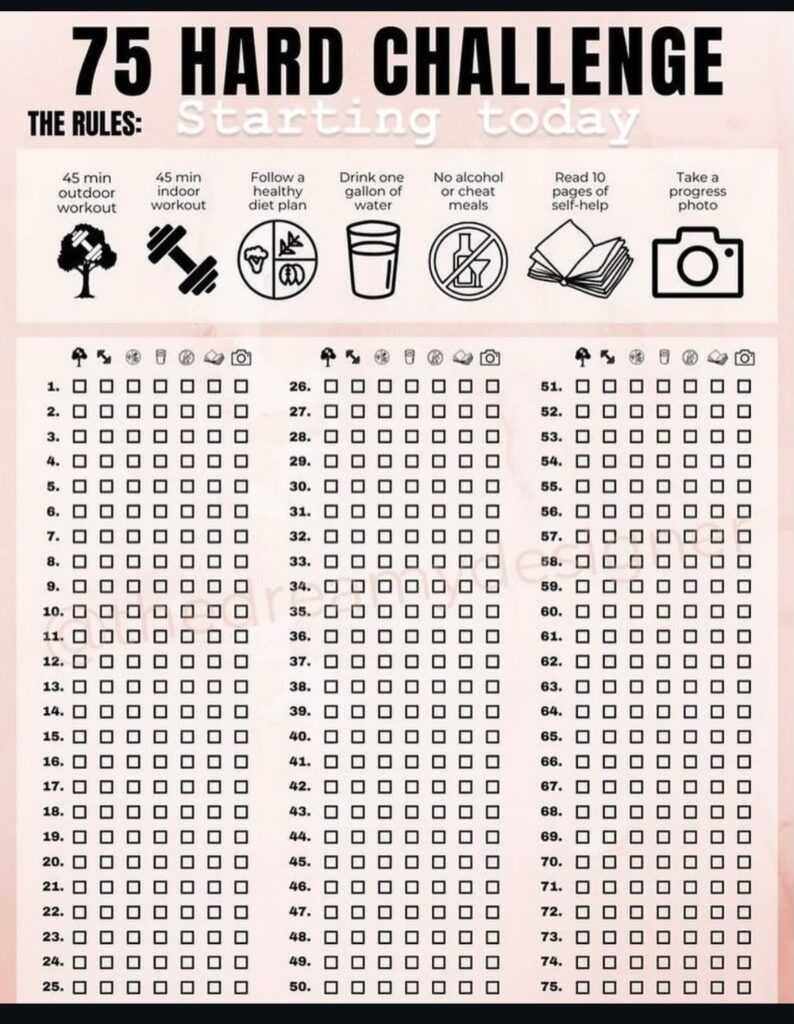
First, let’s look at what this program is. It consists of six daily disciplines you strive to implement every day for 75 days. If you mess up, skip a day, or only do 5 out of 6, you have to start over! Only those with real grit make it to 75.
The disciplines are as follows:
- Stick to a diet of your choosing. This can be anything you want: vegan, carnivore, Whole 30, AIP, etc. You just have to pick one and decide to stick to it.
- Drink a gallon of water every day.
- No cheat meals, no treats, no alcohol
- Two 45-minute workouts every day. One of those workouts MUST be outside (rain or shine!)
- Read 10 pages of a non-fiction book every day
- Take a progress picture of yourself
I Object!
Now, I have several objections to this program, and when one of my friends begins it (and I have had dozens of friends and family members undertake this), I sigh as I sip my mulled wine and read my fiction books. Yes, that is an emotional reaction, but I can and will bring receipts.
Here is why I don’t like programs like this, particularly for women.
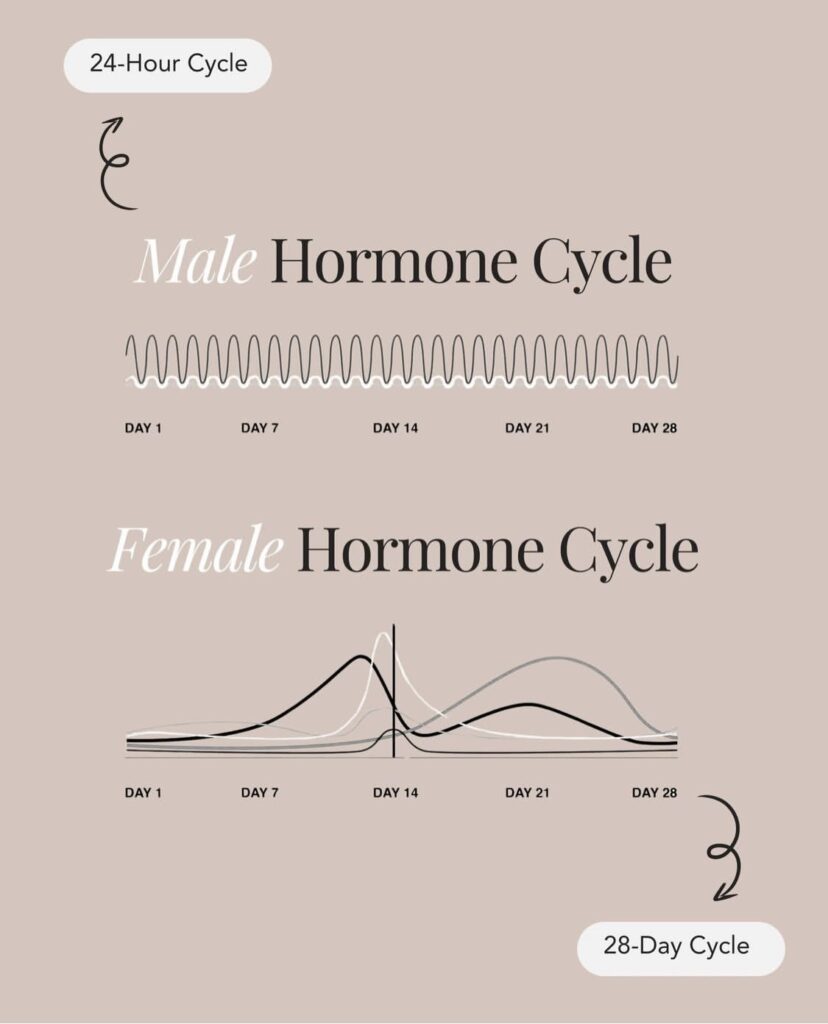
1. Men’s bodies work on a 24-hour hormone cycle. This means that as his hormone levels rise and fall, they complete their cycle in 24 hours. His primary hormone, testosterone, peaks in the morning, giving a burst of energy. It gradually wanes throughout the day. But as he sleeps at night, his body naturally recovers and he’s back to peak in the morning.
Women, however, operate on a roughly 28-day cycle. As she runs through her month, her dominant hormones of estrogen and progesterone rise and fall throughout the menstrual, follicular, ovulatory, and luteal phases. With each phase, her body requires different things to function properly. During the month, she may require more rest; she is naturally more introspective and needs to go inward. At other times, her hormones tell her she could climb a mountain. She may feel super creative and outward-focused. There are times of the month when a woman naturally feels more sexy, more motivated, and less weighed down. There are times when she feels like nesting, sleeping, crying, and praying. And none of these things are wrong!
Because of women’s natural design, there are times when 90 minutes working out each day seems easy-peasy. And times when it feels nearly impossible. There are times when her body says, “Give me red meat and red wine and oysters!” And there are times when tea, fruit, and a few almonds seem perfect.
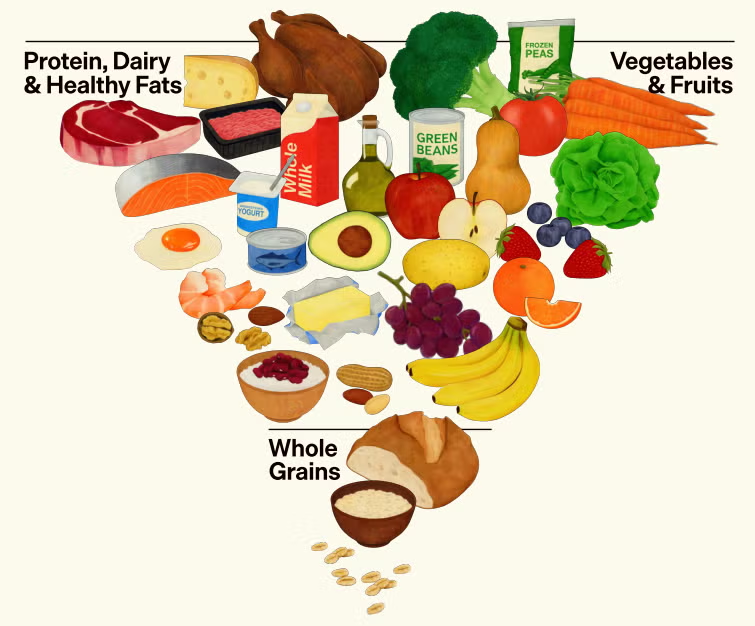
A woman who has been allowed and encouraged to trust her intuition knows when it is time to eat for menstruation and when it’s time to eat for ovulation. This confident, healthy woman doesn’t need a food pyramid to know that grains are going to weigh her down today, but next week, pasta feels just right.
The problem with 75 Hard is that it was made by a man for men. Men can maintain the same daily workout regimen without experiencing any disastrous side effects. But if a woman pushes herself to work out for 90 minutes when her body knows that a half-hour walk plus an hour-long nap would be more beneficial, she can significantly stress her body, raising her cortisol (stress hormone!)
By pushing her body to perform outside of its God-given rhythm, she can throw off the delicate dance of her hormone balance. And that could look like a lot of things, but might include a delayed ovulation, which means a late period, a more painful period, mood swings, water retention, joint pain, and digestive upset.
2. My second objection may surprise you, but it is all that water drinking! Yes, we need water! But there is such a thing as water toxicity, which can lead to a host of nasty symptoms and is hard to diagnose. Drinking too much water can lead to dehydration! Yes, you read that correctly. If you spend a significant portion of your day in the bathroom as water pours right through you, it’s likely that you are stripping your body of essential minerals and electrolytes.
A good rule of thumb is to drink half your body weight in ounces of water every day. I weigh about 140 pounds, depending on the time of the month (that changes for women, too!). So I should drink about 70 ounces, which would be a little over a half a gallon.
For the average person to consume 128 ounces (which is a gallon), he or she would have to be 256 pounds!
So drink water and consider drinking other beverages that replenish your body with essential minerals and vitamins, such as bone broth, herbal teas, lemon water, and kombucha.
3. My third objection is no cheat meals and no alcohol. I know we live in a very secular society, but in my home—my little Domestic Church, if you will—we follow a liturgical calendar. There are times we are commanded to fast and times when we are commanded to feast. The feast is no less meritorious than the fast when done in its proper season.
Lent exists for a reason. We don’t have to make new Lents during seasons of rejoicing (such as when people begin a challenge like 75 Hard on New Year’s Day in the middle of Christmastide). In other words, if you are at the wedding at Cana and there is wine provided by Jesus, don’t insist on water. That’s called hubris.
Embracing seasons of fasting and feasting equally makes each season more significant and effective. Alas, we are only too used to recreating the wheel rather than simply submitting to ancient wisdom.
4. My fourth objection is the lack of sabbath rest. If God worked for six days and rested on the seventh, what makes us think we should push for 75 days without variation? The sabbath rest is not a suggestion; it’s a command because we need it. It is essential for our well-being, our spiritual connection to God, and the fostering of our most important relationships.
One of the quickest routes to burnout and fatigue is not taking time to rest.
75 Challenge vs 28 In Rhythm
Yet, you feel a need for consistency and/or accountability. You know you can’t live October like it is July. I agree. My recommendation is to lean into the seasons and find your rhythm. Find the ebb and flow of life that works for you in these days and be in the moment.
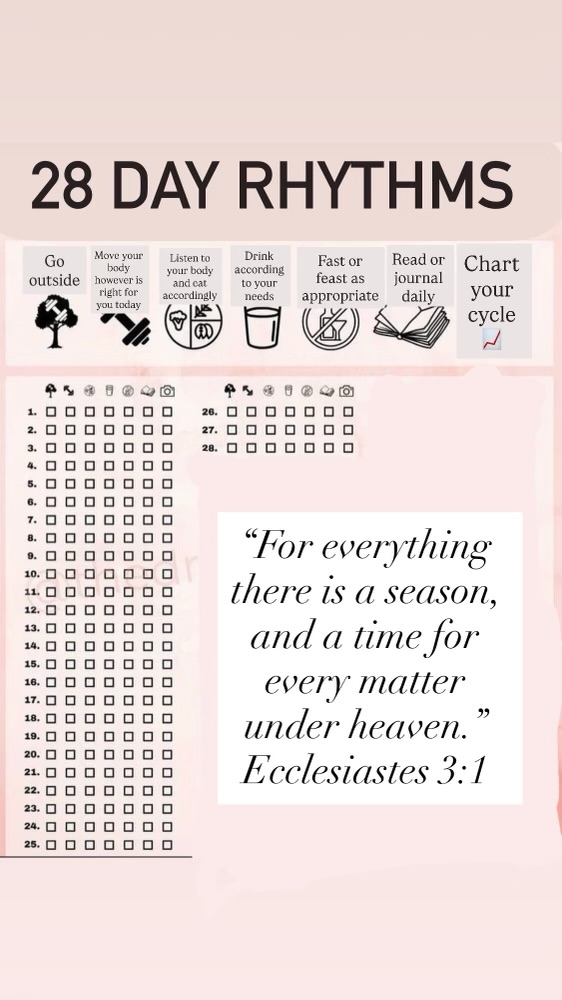
Goal setting can be highly beneficial when goals are tailored to your life and body’s needs. A good time to do that is each cycle. On the day you begin your period (Day One of your cycle), set a goal or two or an intention for the next 28 days. Write it down in your journal or pin it to wherever you chart your cycles.
For example, my goal for my current cycle is to eat a protein breakfast within 90 minutes of waking up. This sets me up for good blood sugar regulation and less irritability throughout the day. Some of my past cycle goals have been to exercise at least 3 times a week, to do at least 30 minutes of spiritual reading, and renew my devotion to the Rosary.
As a busy wife and mother of a large family who works outside the home, my days rarely look exactly the same. There is a lot of variation from day to day and week to week. But learning to live in a rhythm, not arbitrarily imposed, but embraced naturally, can make the busyness seem not at all chaotic.
For example, some of my daily rhythms are:
- Morning coffee with my husband, and we say a morning offering together
- Eating breakfast within 90 minutes of waking up (thanks to my recent goal setting)
- Reading to the school-aged children while they eat breakfast (a passage of Scripture, plus some other spiritual reading) and saying the Morning Offering with them
- Reading for myself every day (I do not differentiate between fiction or non-fiction, as I am quite sure that my soul has been shaped as much by Rilke as it has by any self-help book ever written)
- Moving my body. Sometimes this is yoga outside in the backyard, sometimes hiking a mountain, sometimes walking with my husband, sometimes it’s walking during a very busy shift at the restaurant where I work. Movement is movement.
- Saying night prayers with my husband
While these are my rhythms where they fall in my day, and how much time I spend on each of them differs according to whether I am in my luteal or follicular phase. When I am tempted to “reset,” I ask myself what I feel is missing or out of balance. Then I work to fix that imbalance without overhauling my otherwise quite peaceful existence.
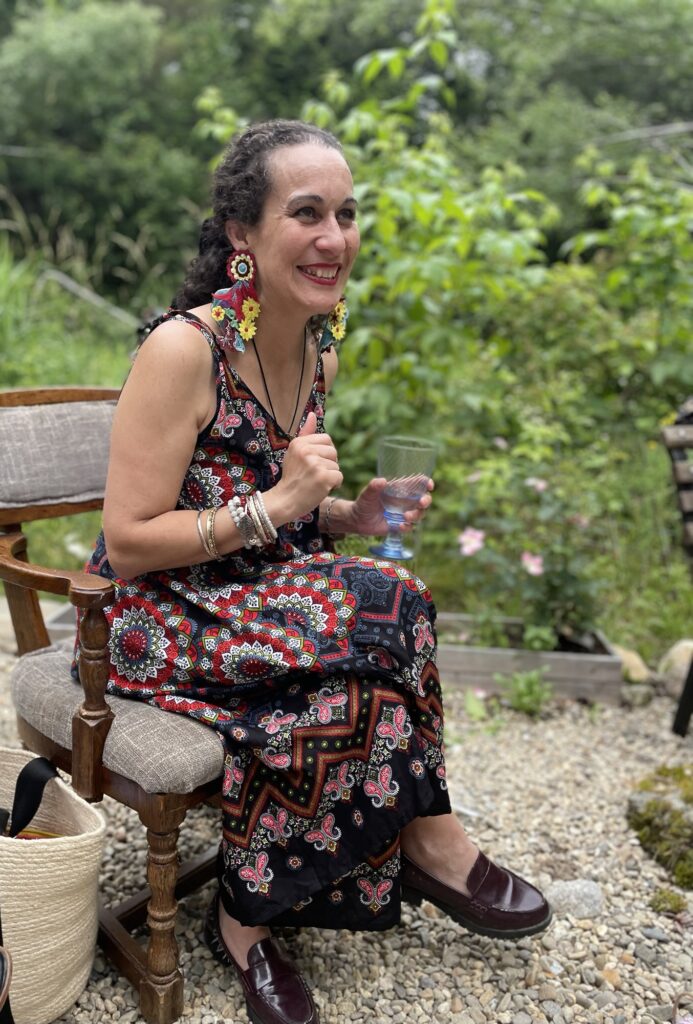
Daja Steuer believes in miracles and in using liberal amounts of cardamom in her cooking. She’s married to Jeff and their blended family consists of 11 children and a menagerie of animals. She’s a Maronite Catholic catechist, homeschooler, chef, and writer. She’s thriving with Crohn’s Disease because of functional medicine and functional nutrition. She makes her home in rural Maine, where you’ll find her hiking, whipping up something delicious, or drinking wine while reading Kahlil Gibran.
 The New Food Pyramid and the Protein Panic: Why Simple Food Still Wins
 Tracking Your Cycle
 The Mystery of Friendship
 Cook! Because You Are Worth It!